

Words by Grace Brady, Art by Leela Stoede.
Author’s note: This article discusses harm to animals.
In Reykjavik Harbour, the commercial whaling vessels are moored next to the recreational whale-watching boats. The dichotomy is jarring, but the harpoon guns secured to the bows of the whaling vessels are discreetly covered, as if to lessen the severity of what they represent. On this stretch of dock, Iceland is confronted with its relationship to whales, both past and present.
I spent this summer in Iceland, conducting fieldwork for my Masters thesis, which involved working with a killer whale conservation project. The focus of our work centered around observing and monitoring Icelandic killer whales. However, we encountered a variety of cetaceans during our surveys, including minke whales (Balaenoptera acutorostrata), humpback whales (Megaptera novaeangliae), and fin whales (Balaenoptera physalus).
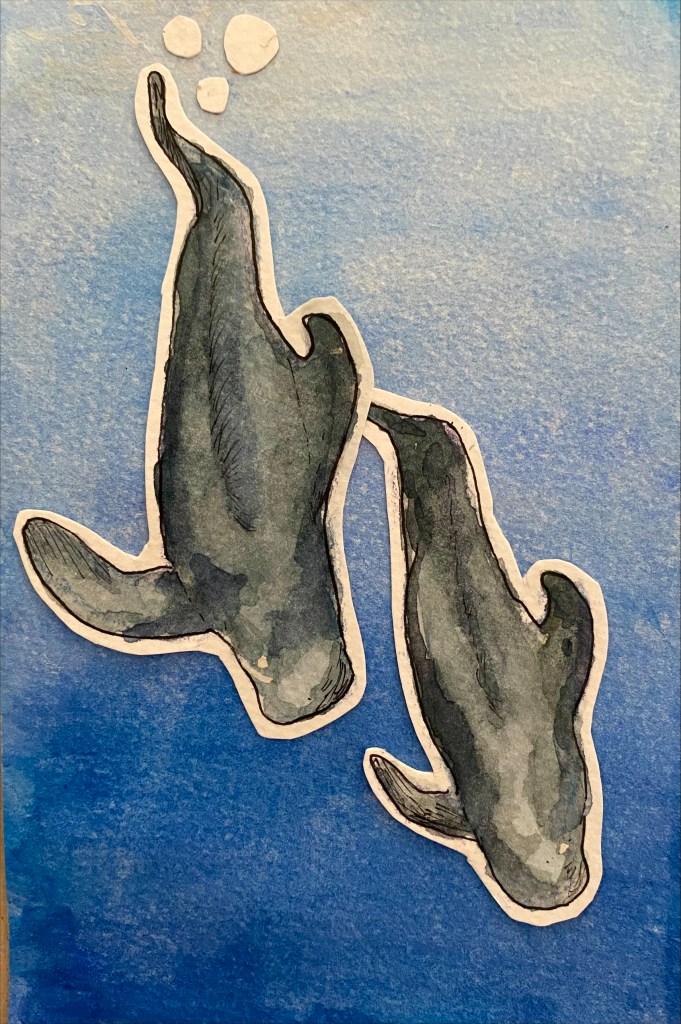
Certain whale species have been historically targeted by the whaling industry in Iceland, with particular referecne to fin and minke whales. The International Whaling Commission (IWC) issued a global moratorium on whaling in 1986, but Iceland left the IWC in 1992 in opposition to this decision. Iceland has since rejoined the IWC, but holds reservations to the moratorium and engages in commercial whaling activity within its Exclusive Economic Zone (up to 200 nautical miles offshore).
The end of August 2023 in Iceland was a tipping point for its commercial whaling industry, where the whaling permits are set to expire at the end of this year. There was a season-long ban on hunting whales, which runs from June to August, with a review on 1 September to assess if the practice can continue. This ban arose because the methods of hunt were declared too inhumane, according to the Icelandic Animal Welfare Act. The current practice of shooting whales with explosive harpoons does not guarantee immediate death, which causes the whales “unnecessary pain” in violation of the Welfare Act. Researchers have argued that there is no humane way to kill a whale at sea, and the process should be discarded entirely.
While there was hope that the 2023 Whaling Season would close without a single dead whale, the review on 1 September permitted whaling activity with stricter regulations. These included not targeting whales with calves and limiting a boat’s distance from the whale (no farther than 25m) to minimise undue harm and stress to the animals. This decision was met with intense outrage from animal right’s groups and Icelanders who see the practice as inhumane and archaic.
The whaling activity in September 2023 specifically targeted fin whales, which are classed as “Vulnerable”, according to the IUCN Red List of Threatened Species. A total of 148 fin whales were killed in just a month before activity ceased at the end of September. This whaling activity is overseen by one company: Hvalur. Since whaling is not economically viable in Iceland, Hvalur also owns large shares in Icelandic banks, food processing, and fisheries This multi-industry significance gives Hvlaur immense lobbying power to leverage their ability to continue whaling alongside their involvement in other dominant industries within the country. Despite holding this power, it is uncertain if whaling in Iceland will cease for good, or if the permits will be extended past 2024.
Monetarily speaking, a living whale is worth far more than a dead whale. Iceland’s pivot to whale-watching and ecotourism brings in about £9 million pounds every year, with 1 in 5 tourists particpating in whale-watching during their visit to Iceland. The actual economic benefits of whaling do not contribute in any substantial way to Iceland’s GDP. Contrastingly, the revenue from whale watching is a more sustainable and long-term revenue stream, should the whales be viewed as only an economic resource and not a keystone species in the North Atlantic ecosystem. Ceasing whaling activity and prioritizing the long-term preservation of whales in Icelandic waters is the way forward. Their future is our shared commitment.


 UnEarth Magazine.
Leave a comment