
By Margaret Chingos
In a burning world, we cannot afford to have a government frozen in place.
As the environmental crisis accelerates, so does our need for innovation. This innovation must be supported and implemented by an efficient government.
Unfortunately, in the US these days an ‘efficient government’ sounds more like a punchline than a reality. The government has long been type-cast as static; an army of paper pushers laying siege to progress. If we are to tackle the climate crisis, this army must be mobilized.
Why is the US government so slow?
According to some, much of America’s governmental lethargy can be blamed on legalism. Legalism emerged in the 1960’s, ironically out of the environmental movement itself. During this time, environmental activists were looking for ways to stop environmental harm. They sued the government to halt pollution, deforestation, and extraction.
This strategy worked. It slowed destruction and forced accountability. But it came with unintended consequences.
Legalism painted the government as the enemy, needing to be constrained and checked. Moreover, as lawsuits became the language of progress, more lawyers picked up politics. Today, though lawyers make up only 1% of the US population, they fill one-third of the House and half the Senate. This has made legal thinking the default in politics.
The result is a government decorated with red tape.
A new mission, an old system
While this approach to environmental activism may have been successful in the 1960’s, our goals have dramatically changed. We no longer need to stop building; we need to build better.
The US government has committed to decarbonizing the economy and transforming the built environment, but it planned to do so with laws and systems that are better designed to block green construction than allow it.
Construction is nearly impossible under the current system. It takes an average of 4.5 years for federal agencies to complete environmental impact statements for major energy projects. Even once permits are acquired, construction can take up to a decade. These delays explain why the US expands its electricity transmission infrastructure far too slowly to meet its goals (approx. 1% per year).
It is important to note that governmental checks remain essential. Environmental review is one of the few, precious protections that communities have against harmful developments. However, a balance needs to be struck that exercises caution without inhibiting progress. The rules that once protected the planet should not prevent the projects we need to save it.
Better Government
Acknowledging that the current system is not suited to support the US in building the clean energy infrastructure it needs, there are debates on what should change.
Some argue that the government should do less, contracting out to the private sector more often. Private entities operate under market pressures that reward efficiency and speed, two guarantees the government frequently cannot deliver. As a result, on average, publicly funded infrastructure costs about 20% more than privately financed projects.
In practice, this can take the form of public-private partnerships (PPPs). In these arrangements, the government contracts with a private enterprise to fund, design, build, and manage an infrastructure project in return for receiving operating profits from the completed project.
The efficient funding and execution of these projects is enticing. However, critics point out that PPPs allow rich corporations to gain from public needs, turning public goods into private profit. The public sector has responsibilities that the market does not, such as ensuring fairness and protecting all people. Considering this, perhaps giving the reins to the private sector is not the answer.
Others believe the government can be reformed to meet the challenges of the modern day. Reforms, such as permitting reform, aim to clear the red tape cobwebs and make it easier for the government to build the green infrastructure it needs. By rethinking the processes that propel this critical work, reform offers the promise of innovation without compromising on just and equitable implementation.
The bottom line is that the government cannot continue to limp by on static stereotypes. To build a sustainable future, the government must take charge and the people must let it.
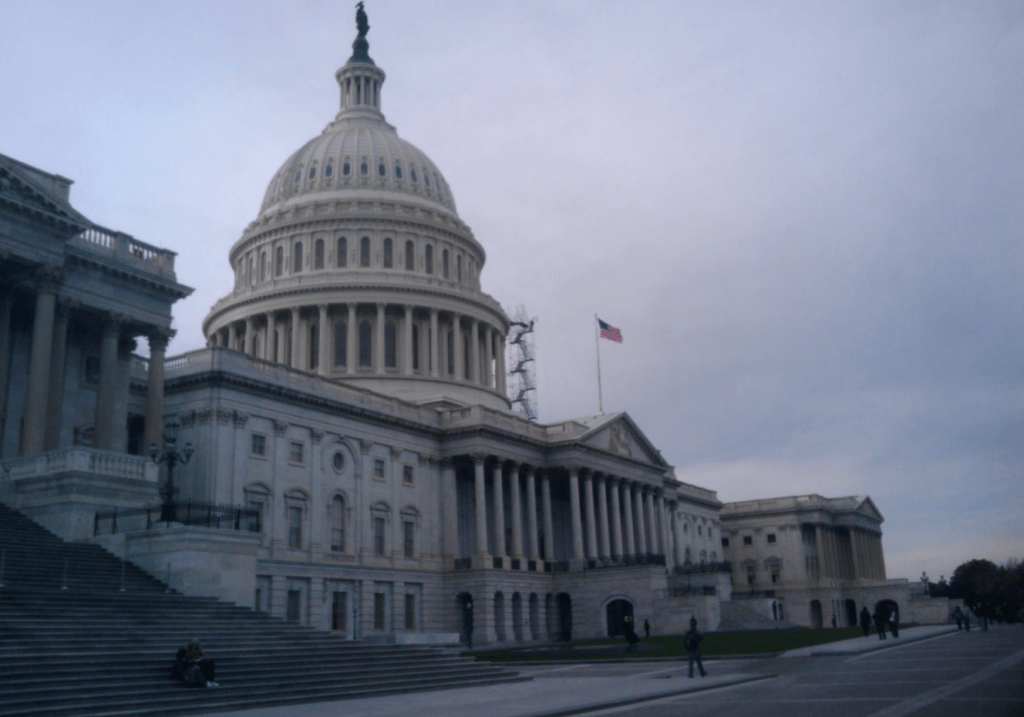
Capitol building‘ by madprime is licensed under CC BY-SA 2.0.



Leave a Reply