

Words by Lily Kane, Art by Holly Brown.
Flooding, wildfires, heatwaves, hurricanes, storms, and cyclones ravaged the world this year causing destruction and damage. As our planet screams for help, climate catastrophes are set to increase in both frequency and severity. The daunting reality; we may only be experiencing the tip of the iceberg, with no one to pick up the bill. As insurance industries retreat from areas susceptible to climate change, all are left vulnerable.
January saw severe flooding in Western Australia, with parts of the outback underwater, which began a record-breaking year of climate disasters. This catastrophic event merely became another on the never-ending list of disasters. Golf-ball-sized hailstones destroyed cars in France, Greece had the largest single wildfire in Europe’s history, wildfires ravaged the Hawaiian island of Maui, temperatures in California’s Death Valley neared the highest recorded on earth. Whilst the second-deadliest cyclone ever recorded hit Malawi and Mozambique, September saw China inundated by flash floods, at the same time Storm Daniel decimated the Libyan city of Derna. In every corner of the world, developed and developing countries alike, a climate catastrophe loomed. Homes and schools were destroyed, millions were displaced, waterborne diseases were spread, humanitarian crises declared, and thousands of lives lost.
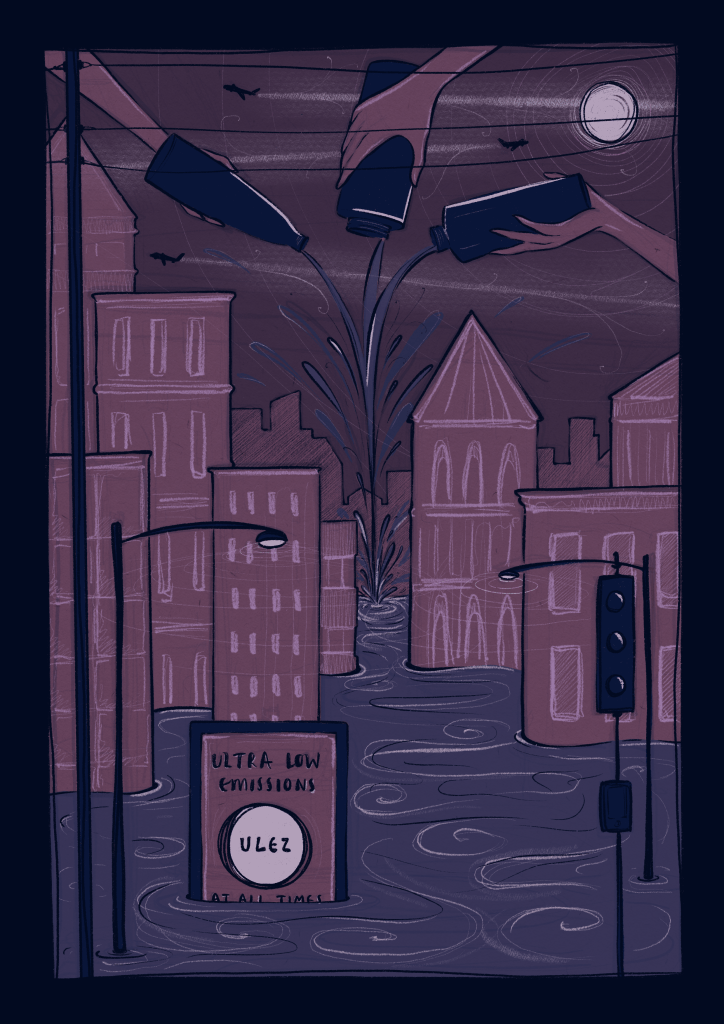
These are just a few of the incidents that hit headlines this year, as climate catastrophes are occurring on a scale never experienced before. In the first half of 2023 alone, total losses from climate related damage stood at $110 Billion. With less than 40% of these losses insured, the scale of the insurance protection gap is clear. It may seem crude to monetize such devastating events, however, natural disasters have and will become an increasingly important part of our world.
Increased climate risks are sending shockwaves through the insurance industry. Insurance acts as a risk-distributing network; increased unpredictability and severity of climate-related events undermine insurers’ abilities to assess and price the associated risks. As an industry built upon risk predictability, insurers are pulling out of high-risk areas that are increasingly susceptible to extreme weather events, particularly flooding and wildfires, putting property and livelihoods at risk. This has been a major problem in US states such as Florida and California, with major insurance companies leaving over the last two decades. This has resulted in growth of state-run property insurance for those who cannot buy insurance from a company, leading to huge deficits and significant losses for Florida and California’s state-run property insurers.
As insurers and reinsurance companies retreat, individuals and businesses are forced to pay extremely high premiums or bear the risks themselves. Without appropriate insurance, people are left financially exposed when disaster strikes, generating a multitude of socio-economic implications, particularly in developing countries. The “Climate Protection gap” refers to the non-insured economic losses after a climate-related catastrophe and is disproportionately large in developing countries. The larger this figure, the greater the impact on an economy’s financial resilience. Developing countries are adversely impacted as climate change induced natural disasters become increasingly common, affecting large populations who live in vulnerable areas. is very low insurance coverage in low-income countries and near-negligible proportions of losses are insured, making countries reliant on government interventions and international funding.
It is, however, not all doom and gloom. The persistence of climate catastrophes and mounting damage costs are not going away any time soon and require the insurance industry to step up and bolster financial resilience.Insurance and Reinsurance industries can develop and implement climate conscious approaches to risk management, helping protect policyholders and the sustainability of the industry. The insurance industry has the potential to drive climate-resilience, through implementing adaptation measures in their underwriting, such as or the development of early warning systems. Adaptation clauses such as these are a possible way of maintaining adequate supplies of affordable insurance products, reducing physical risk factors against climate change, and closing the climate insurance protection gap. This is why the insurance industry has a vital role to play in mitigating and adapting to climate change, whilst providing financial support.
Climate change is causing damage, on a scale so large, that it is no longer viable for insurance companies to operate in certain areas of the world. How do we ensure the sustainability of the insurance industry and maintain financial resilience whilst protecting people and property? There are many problems facing the insurance industry, but climate change is not disappearing, and it poses a great threat to the world of insurance. The industry must respond or face significant financial losses.



 UnEarth Magazine.
Leave a comment