
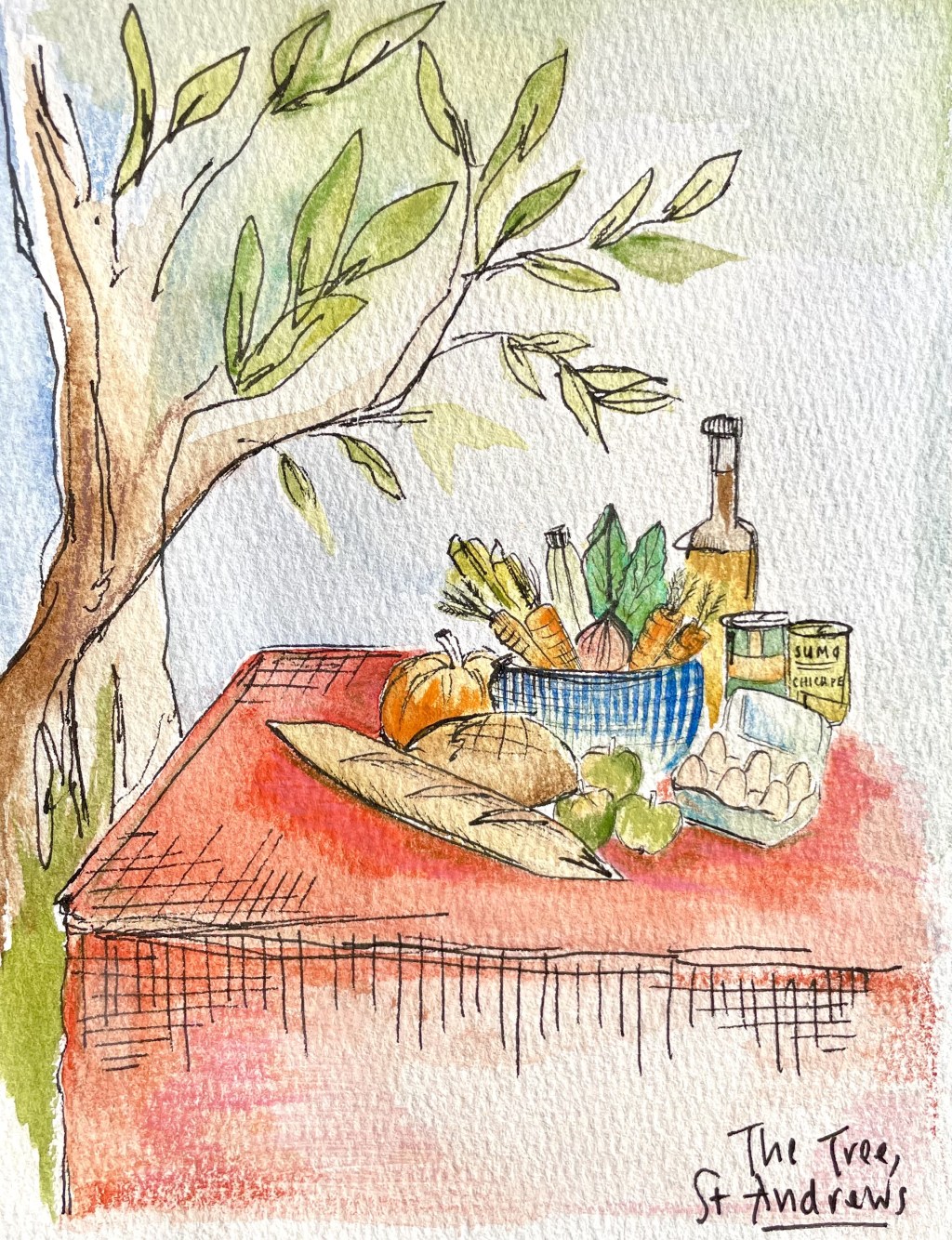
Words by Isabelle Marsh, Art by Lucy Brown
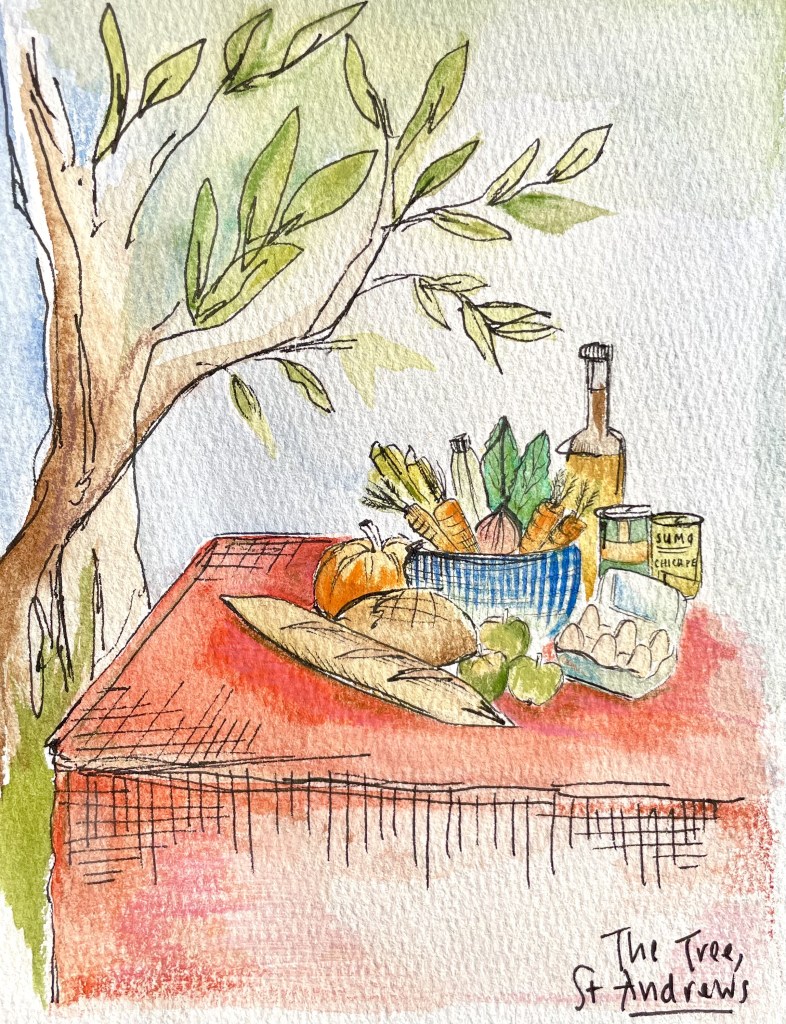
Like numerous students in town, I often find myself sourcing most of my produce from major supermarkets in and around the area. Despite this routine, I don’t necessarily feel a strong attachment to the products I purchase but seldom explore alternative options for my food consumption. Occasionally, I’ve ventured to try something different by purchasing a veg bag from The Tree, a student-operated fruits and vegetable co-op. I’ve noticed a notable disparity in my connection to the produce I obtain from Tesco compared to The Tree’s enthusiastic clientele, who consistently exhibit genuine excitement for the products on offer. I asked a regular customer at The Tree why they keep coming back-–for them, it is about the quality of the produce. “The eggs are just so much better than any of the ones in the supermarket! They’re so big, and yellow, and for all that quality there’s only a £1 difference”. Another commented on the size of the shallots offered by the Tree and the ones in Tesco’s: – “they’re like triple the size!”. As a fan of both eggs and shallots, this really piqued my interest in how The Tree were able to supply produce that was better quality at such competitive prices. So, I decided to sit down with the President of The Tree Eliza Patton to find out more about the student run co-op.
The Tree has been quietly revolutionizing the way the St Andrews community thinks about food since its inception in 2014. Beginning around the same time as the Transition initiative, the co-op aimed to foster a more sustainable and resilient community through local action. What began with an average of 8 orders a week has blossomed into a thriving cooperative, with orders ranging from 20 to 35 weekly. The growth of The Tree is not just in numbers but in the depth of its community engagement and its commitment to sustainability. Central to The Tree’s ethos is its connection with the local community and businesses. The Tree has inherited and nurtured connections with a web of producers such as Belfield Farms and Pittormie Farm, both located within 5 kilometres of St Andrews. These partnerships have enabled The Tree to offer “veg bags” filled with whatever is fresh that week, alongside itemized vegetables and produce, directly linking the local community to the source of their food.
During the challenging times of COVID-19, Eliza explained how The Tree adapted by offering home- delivery services, a testament to its resilience and commitment to serving its community. This period also saw a shift from a more informal organizational structure to the adoption of specific roles to better manage the growing demand and ensure the co-op’s sustainability. The Tree now boasts 9-10 administrators and 44 volunteers, a significant leap from the 7 people involved in its second year. This growth has enabled The Tree to not only increase its customer base but also offer a wider variety of products, all while maintaining manageable and consistent order numbers. The cooperative sources all its dry goods from Green City, a wholesaler based in Glasgow that prides itself on offering products that are 100% Fairtrade and hiring ex-felons.
The Tree communicates with its community through its newsletter and Instagram, offering insights into available products like fresh eggs, ciabatta, and unique varieties of garlic and sprouts. These efforts are part of The Tree’s broader mission to promote a circular economy, reduce food miles and carbon emissions, and encourage local eating through organic and regenerative agriculture.
Eliza makes clear that The Tree is not just about providing nutritional and fresh food- it’s about making quality food accessible and fostering a sense of community. It serves as a beacon for sustainable living, encouraging people to “vote with their wallets” and support a system that aligns with their values. The cooperative hosts potlucks open to the public, creating a space for people to come together, share food, and engage in meaningful conversations about sustainability and community. Through offering products such as Palestinian olive oil, The Tree also connects its local community to broader global issues, signposting to other communities and networks with similar values. The Trees’ approach to business made it a model for sustainable living in the St Andrews community and beyond.
Through its commitment to sustainability, community engagement, and ethical practices, The Tree is changing not just the way people in St Andrews eat but also how they think about food and community. As The Tree continues to grow and evolve, it remains a beacon of hope and a testament to the power of collective action in building a more sustainable and equitable world.



 UnEarth Magazine.
Leave a comment