
Words by Janvi Poddar, Art by Leela Stoede
Unchecked capitalism is designed to extract from the earth without replenishing it. As a direct consequence of capitalism (and colonialism)’s over-extractive nature, biodiversity loss has become a central element of the 21st century’s environmental crises.
Technological advancements and policy interventions are vital components of environmental sustainability, but there exists a natural ally that often goes underutilized in our battle against environmental challenges: Rewilding.
Rewilding holds immense potential as a climate solution. Natural ecosystems such as forests, mangroves, and peatlands are incredibly effective at capturing carbon and restoring the planets natural defences to a warming climate. Rewilding also offers numerous economic opportunities, including job creation and income generation opportunities for vulnerable or marginalised groups.
Rewilding landscapes has been on the environmentalist agenda for a very long time. In recent years, large scale afforestation and rewilding projects have gained traction, especially in the corporate world, in the hopes to further corporate social and environmental responsibility. But most of these efforts to rewild the earth are nothing more than excellent examples of capitalist greenwashing.
However, in Britain today, there are dozens of great cases of independent, smaller-scale, community-based rewilding projects that are restoring land by planting trees, meadows, reintroducing lost species, and much more. There’s an excellent example of this close to home.
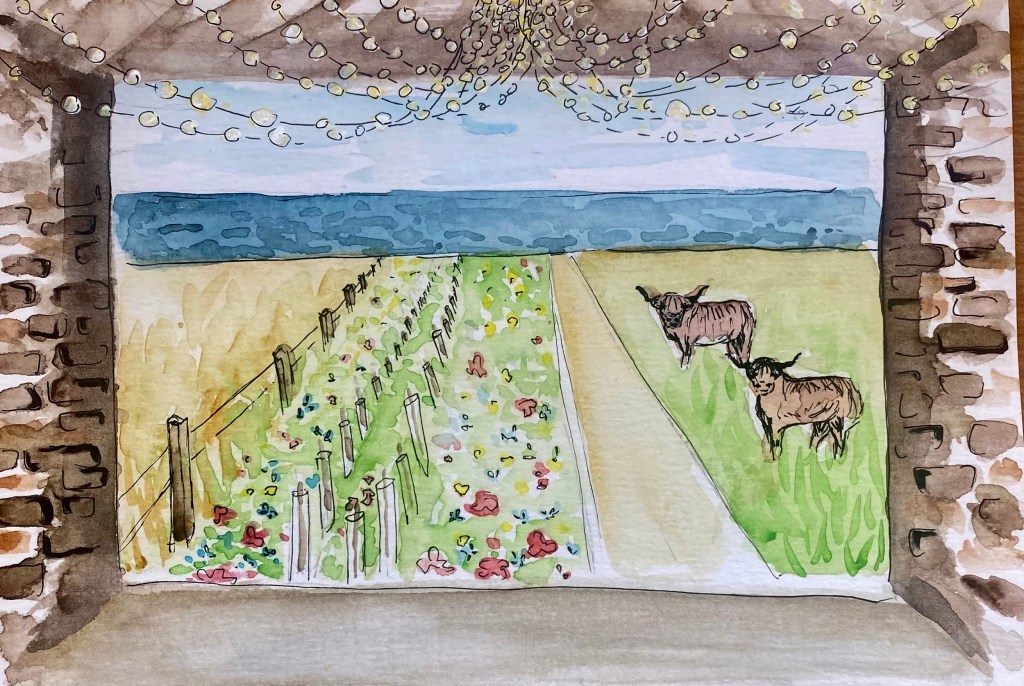
For most St Andrews students, Kinkell Byre is simply the ball venue we frequent a few times a year. What most people do not know is that that the Byre, primarily an events venue, has become the site of a remarkable rewilding initiative, Rewilding Kinkell. Until recently, the Byre’s land (like much of the land around it) was intensively farmed at the expense of biodiversity and wildlife. To restore this land and bring back some of the lost wildlife, the Byre has been spearheading a project to re-establish a biodiverse coastal ecosystem. This includes efforts to plant native tree species, sow wildflower meadows, create small ponds, and even establish an apple orchard. If you are a regular on the Fife coastal path, you may have had the pleasure of meeting one of the highland cows the Byre has brought in for conservation grazing.
Years from now, the once barren land surrounding Kinkell Byre will be covered with diverse, mature woodlands. The wildflowers will blossom in the summer, and the lost wildlife – birds, small mammals, reptiles, and rodents will have returned home. Generations of students, tourists, and locals will be grateful for this natural haven.
But, like many rewilding projects, the Byre struggles to fund its project. Rewilding is an expensive undertaking and is extremely underrepresented in climate finance. The British government and a few other institutions offer funding options such as the Rewilding Innovation Fund, but these offer minimal support. Rewilding Kinkell is under threat of being halted. They recently achieved charitable status and have launched a crowdfunding campaign in hopes of generating funds to cover operation costs.
In the quest for sustainability, rewilding is one of the most powerful, long lasting climate solutions. But land cannot be rewilded if it is constantly reduced to a commodity, a means for consumption. The immense potential of rewilding and nature-based climate solutions is largely absent in “green” capitalism. If sustainability is the new goal of philanthropy, then investing money and resources in projects like Rewilding Kinkell seems like an obvious answer. International cooperation and financing mechanisms can facilitate large-scale rewilding projects across borders, maximizing their impact on global climate mitigation efforts. Rewilding initiatives can drive innovation and investment.
While governments aspire to protect and regenerate natural spaces, so far they have failed. Rewilding can only be a viable climate solution if it is done expansively and rapidly. To unleash the full potential of this climate solution, supportive policies and incentives are essential. Measures such as land-use planning regulations, incentives for conservation, and payments for ecosystem services to promote rewilding initiatives need to be deployed. And most importantly, recognition and financial support for projects such as Rewilding Kinkell needs to be a priority.
For so long now, our cities and our busy lives have been separate from nature, outside of it. Wilderness is often an escape from everyday realities, and nature is a luxury that money buys. Rewilding the spaces around us, in our cities, in the countryside, is not just a solution to a problem. It is a necessary step. If nature were in our towns and cities, would we feel the need to escape less often?
If you are interested in rewilding, read more about the Rewilding Kinkell initiative. They also share regular updates on social media. To support the project, you can donate, ask to volunteer, or simply spread the word!



 UnEarth Magazine.
Leave a comment