

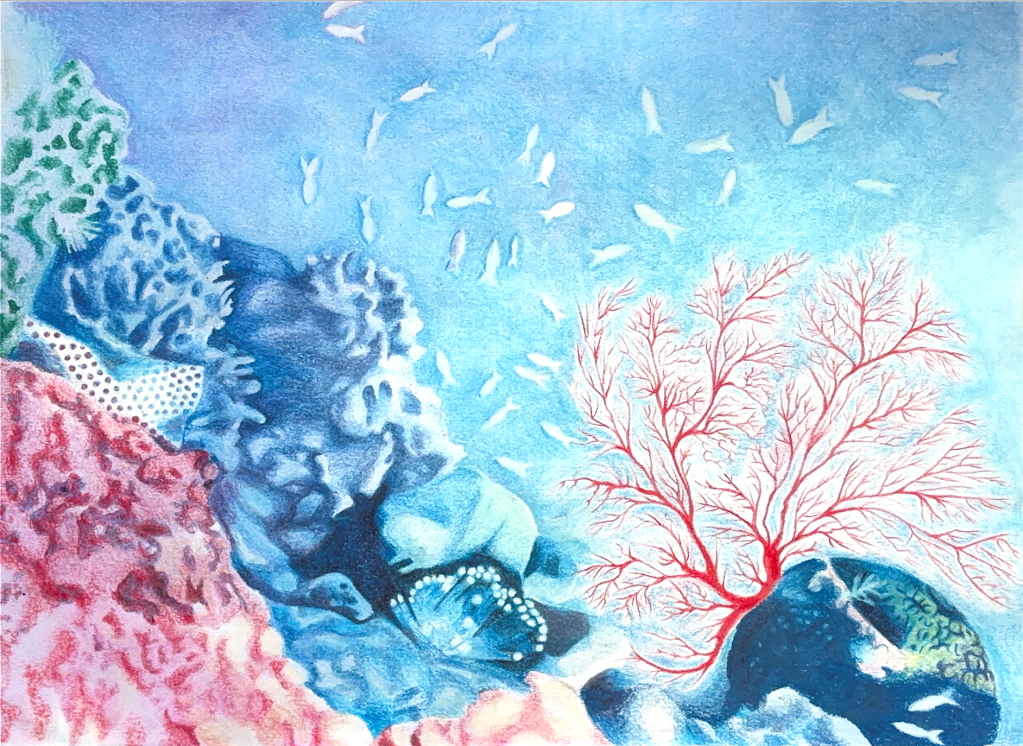
Words by Katie Monk, Art by Cori Birkin.

Living in the UK, casual conversations about the weather used to be a societal norm, an uncontroversial form of small talk to keep discussions flowing. However, as climate change takes centre stage, those seemingly harmless chats can now trigger a sense of unease and worry. The impacts of extreme weather events, record-breaking temperatures and biodiversity loss are becoming increasingly tangible, resulting in a growing concern known as ‘eco-anxiety’. Eco-anxiety is an emotional response to the daunting reality of climate change, pollution, and biodiversity loss. The fear of inaction and the overwhelming sense of guilt associated with eco-anxiety have become commonplace, particularly among the younger generation; it’s essential to open up conversations instead of bottling up emotions within. As we continue to live in a fast-paced technology-focused world, it’s more important than ever to make time for ourselves and connect with nature, one of the easiest ways to limit eco-anxiety.
In December 2020, the Climate Ambition Summit saw Boris Johnson, then Prime Minister of the UK, boldly declaring that the UK isn’t composed of ‘tree-hugging, mung bean-munching eco freaks’. This remark may have been made in an attempt to distance the UK from what he perceived as extreme environmentalism or unconventional approaches to conservation, but instead harboured a stigma against those who express any sort of connection to nature.
This stigma is perhaps rooted in societal perceptions, with environmentalists facing skepticism and accusations of alarmism for years. The thought that having a strong connection to nature equates to a high level of eccentricity is exemplified in the dismissive label of tree hugger, belittling those who prioritize nature and highlighting the detachment of nature from others. The label ‘tree hugger’ removes the powerful sentiment that comes with the history of the first original tree huggers. In 1730, the first tree-huggers were recorded in a village, Rajasthan, in India sacrificing themselves in an embrace to protect Khejri trees that their community relied upon. Instead of using tree-hugging as a diminutive term to reduce environmentalists to a stereotype, using the term is shown to be a powerful expression of humanity’s interdependence with nature.
Environmentalism is finally gaining more mainstream acceptance. There is growing recognition of the importance of environmental conservation and sustainable living. Initiatives promoting outdoor recreation, environmental education, and eco-friendly practices are helping to break down stereotypes and foster a greater appreciation for nature. It takes just one person to make a difference, and that could be any one of us. Highlighting the benefits of engaging with nature could encourage more people to tune into nature and protect it.
Extensive research has shown that there is a direct link between taking environmentally focused actions and positive, personal well-being. Engaging in tangible and environmentally-responsible behaviour generates a sense of fulfilment. Studies have highlighted the major benefits of spending time amongst trees. These benefits include stress-reduction, lowered blood pressure and quicker recovery from illness or trauma. Not just this, but the actual act of hugging a tree triggers the release of oxytocin, the ‘feel good’ hormone creating that happy and loving feeling.
Instead of letting eco-anxiety paralyse you, think about hope, and how it can act as a catalyst for positive change. Hope can instil a sense of purpose and motivate you to actively engage in efforts that contribute to a sustainable future. It transforms the fear of inaction into a driving force for positive change. When people believe that their actions can make a difference, they are more likely to enact them. Sometimes, the bad news and the consistent doomsday clock is only scaring people into not making change. The majority of change needed to prevent that isn’t on you and me, it is on governments and corporations. But that doesn’t mean we just get to sit back and watch the world burn. There are plenty of actions happening throughout St Andrews that any student can get involved in, from joining a Transition event to going to a Marine Society beach clean, or volunteering within one of the Sustainability committees.
Or, how about just going out and simply hugging a single tree?



 UnEarth Magazine.
Leave a comment