
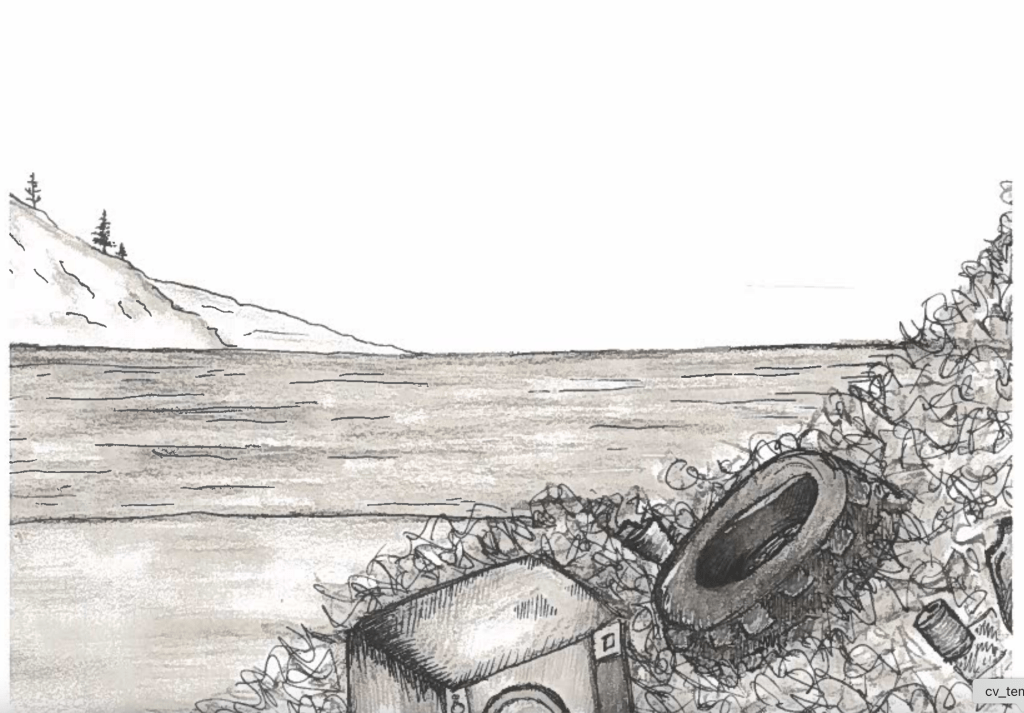
Words by Defne Celiktemur, Art by Julia St John.
The stench of sour and rotten waste on the street. Mountains of bin bags flung across the pavement, the contents spilling out and consumed by swarms of flies. Strands of hair knotted with tiny pieces of plastic and netting after swimming in the sea. Gloopy puddles with a strange smell and unknown contents. All before you even approach a landfill site.
Turkey’s waste problem is normalised and intwined into everyday life. It is no surprise that there is too much waste to be properly disposed of; it has always been on the streets.
According to Greenpeace, in 2023, roughly 140,900 metric tonnes of waste were exported from the UK to Turkey. That is just waste from the UK, and only plastic waste. In 2020, Turkey was the largest recipient of plastic waste from the EU after China’s ban on imports in 2018. This huge influx of waste is putting great pressure on the environment and the landfill sites across the country, that are too full and struggling to cope. As Turkey is the second largest manufacturer of plastics in Europe, these problems have been amplified to an even greater extent.
Not only does the issue lie in the receiving of the waste, but also in the disposal of it. It is impossible to process efficiently and safely. Marga Zambrana, from Equal Times notes that those who work in waste management are often from marginalised groups and paid the bare minimum so that companies can maximise the profit from its disposal. It is an unjust system that negatively impacts the health of its workers. The burning of plastics releases harmful toxins and chemicals linked to respiratory problems and cancer. Many of these workers do not have health insurance because they are employed illegally, meaning they cannot get the medical attention they require. To make matters worse, many of the plants are located in extremely close proximity to towns and cities, putting other citizens at risk too.
We need to see greater action and accountability from the government through the implementation of laws and regulations aimed at reducing the volume of waste and mitigating the effects of its disposal. An easy start would be to reduce the consumption of plastic in Turkey alone. For example, greater education on single-use plastics such as replacing plastic bottles and bags with reusable alternatives. It is common for people to purchase multiple shopping bags every time they buy groceries that tear after one use and must be disposed of. This is unnecessary and easily solvable. More attention needs to be paid to the human rights regulations in place. Workers need better pay and proper treatment to make disposal sustainable and safer. But more than this, we need to put a stop to waste exportations to Turkey. Countries across the globe need to take responsibility for their own waste and dispose of it themselves. ‘Waste colonialism’ needs to be put to a stop. Its effects impact the whole nation and if they continue, the world.



 UnEarth Magazine.
Leave a comment