
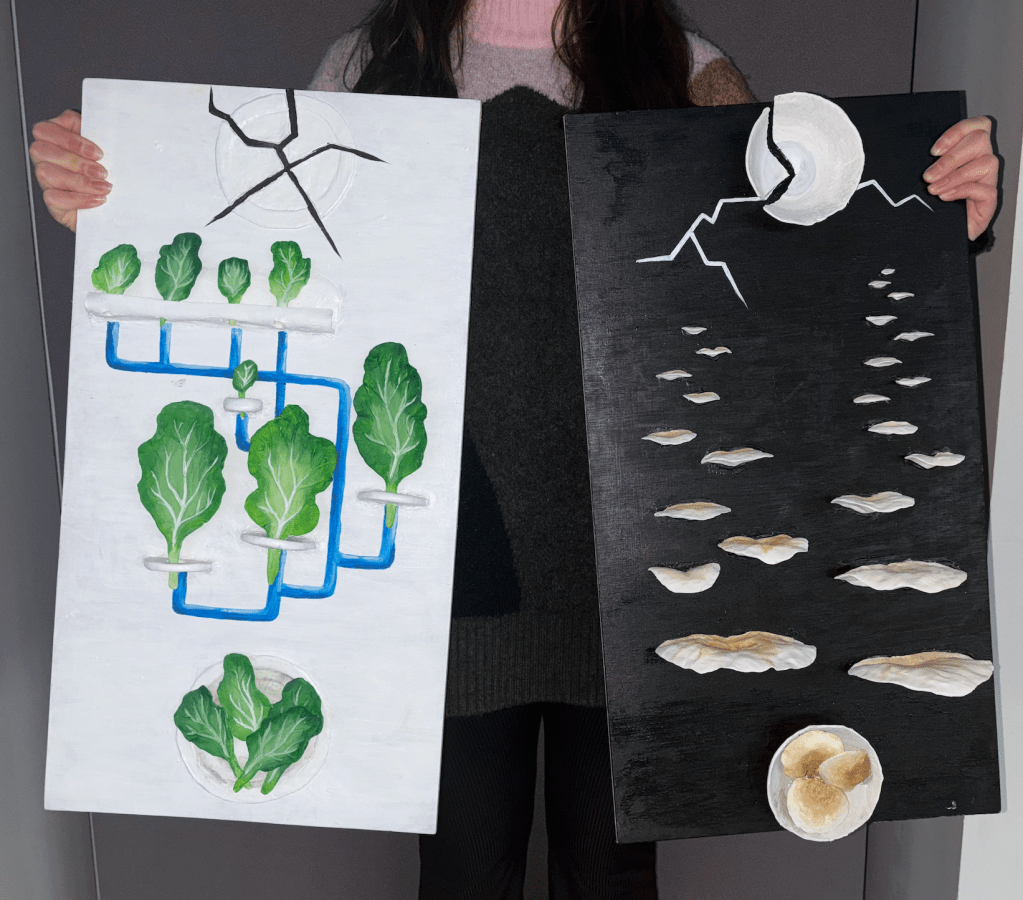

Words by Ellie Thorson, Art by Emily Warden.
With over 820 million people suffering from hunger worldwide, the challenge of feeding the global population is more urgent than ever. As 95% of the world’s food production depends on land-based systems, increased soil degradation trends severely limit traditional agricultural productivity, threatening food security. Soil degradation may result from chemical imbalances, loss of soil structure, nutrient loss or loss altogether by erosion. In regions where poor soil undermines farming efforts, regenerative alternatives like aquaponics and mushroom cultivation offer sustainable, resource-efficient solutions, providing both nutritious food and a path toward greater resilience.
A person is ‘food insecure’ when there is a lack of regular access to enough safe and nutritious food for normal growth and development and an active and healthy life. Food insecurity may be due to unavailability of food and/or lack of resources to obtain food, and it can be experienced at different levels of severity. Soil degradation reduces crop yields, exacerbating food insecurity in vulnerable regions such as sub-Saharan Africa, parts of Asia, and Small Island Developing States. But not all hope is lost— there are several regenerative alternatives that do not rely on soil, such as aquaponics and mushroom cultivation, that can provide sustainable solutions.
Aquaponics as a Regenerative Solution
Aquaponics combines aquaculture, the practice of raising fish, with hydroponics, the mechanism of growing plants in a soilless environment. Cultivated together, fish and plants mutually benefit, as fish produce waste that is converted into nutrients for the plants to absorb and the plants purify the water for the fish. A closed-loop system, aquaponics produces both protein (fish) and vegetables. Since it does not require soil and uses water efficiently, it is an accessible solution for regions with poor soil quality and facing water scarcity. In Namibia, the arid climate and poor soil hinders traditional agricultural practices — almost 70% of food is imported from South Africa, with about 430,000 Namibians reported to be food insecure. In a study by Rego et al. (2019), aquaponics was found to be one of the most efficient ways to combat food security. However, it should be noted that widespread aquaponics developments may be restricted by the initial setup costs and necessary technical knowledge of its complex interactions.
Mushroom Cultivation as a Regenerative Alternative
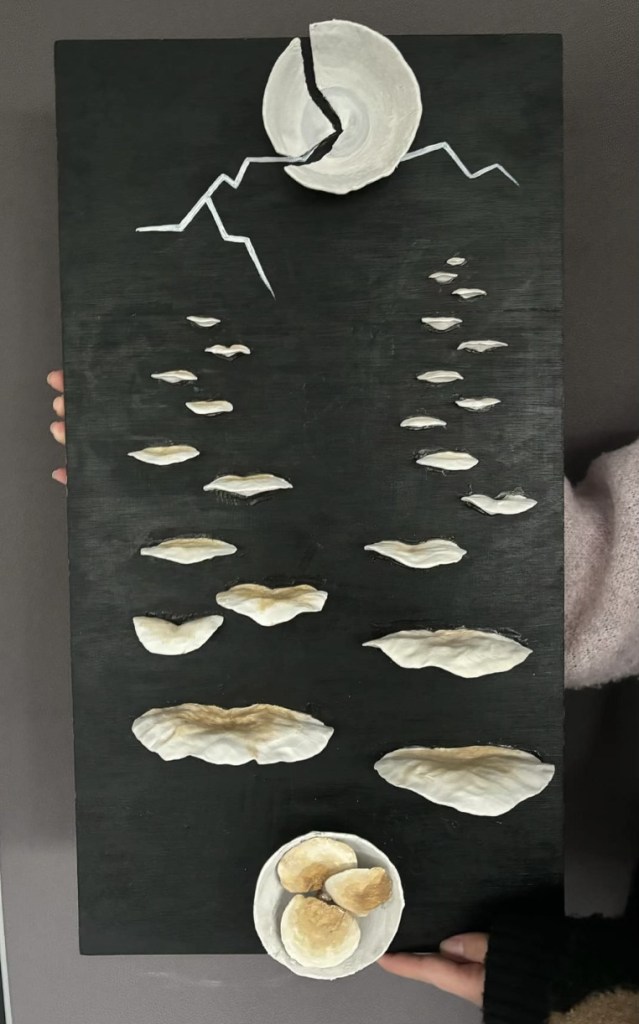
Mushrooms are grown from “spawn,” which is a tissue culture developed from spores in sterile lab. Purchased from specialized suppliers, the spawn is mixed with a substrate, such as sawdust, coffee grounds, cardboard, and compost, to spread its mycelium. Not requiring access to land or significant capital, investment, mushrooms can be grown by both rural farmers and urban dwellers. The substrate can be sourced from readily available recycled materials, promoting sustainable farming practices and supporting circular economy initiatives. Additionally, rich in protein and micronutrients, mushrooms support food-insecure diets with their high nutritional value. With the ability to be grown year-round, mushroom cultivation was found to combat malnutrition in India, in addition to supporting income generation. However, similarly to aquaponics, financial requirements of the initial setup and the need for knowledge about certain species or conditions may stand as a barrier for widespread implementation.
In conclusion, the urgent challenge of food insecurity, exacerbated by soil degradation and its detrimental impact on agricultural productivity, necessitates innovative solutions. Regenerative alternatives such as aquaponics and mushroom cultivation emerge as viable pathways to combat this global issue, particularly in regions with poor soil quality and limited resources. Aquaponics not only efficiently uses water but also creates a symbiotic relationship between fish and plants, producing both protein and vegetables in a sustainable closed-loop system. Similarly, mushroom cultivation offers an accessible option that leverages recycled materials, providing nutrient-dense food while promoting sustainable practices.
Despite the initial setup costs and the need for technical knowledge that may hinder widespread adoption, the potential benefits of these systems are significant. By investing in education, resources, and supportive policies, communities can harness the power of aquaponics and mushroom cultivation to enhance food security. Ultimately, these regenerative practices represent a crucial step toward sustainable food systems, supporting wellbeing for vulnerable populations.





 UnEarth Magazine.
Leave a comment