
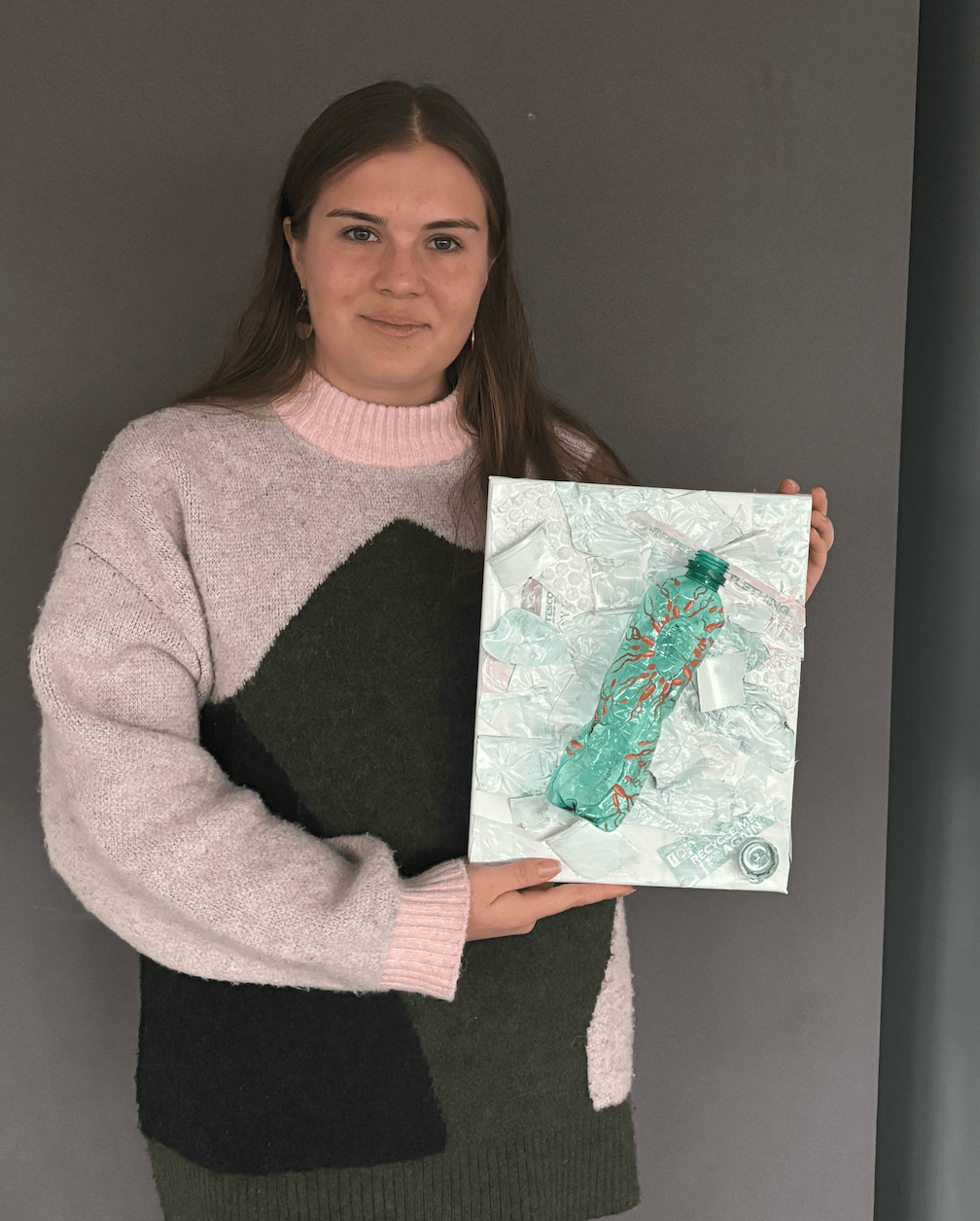
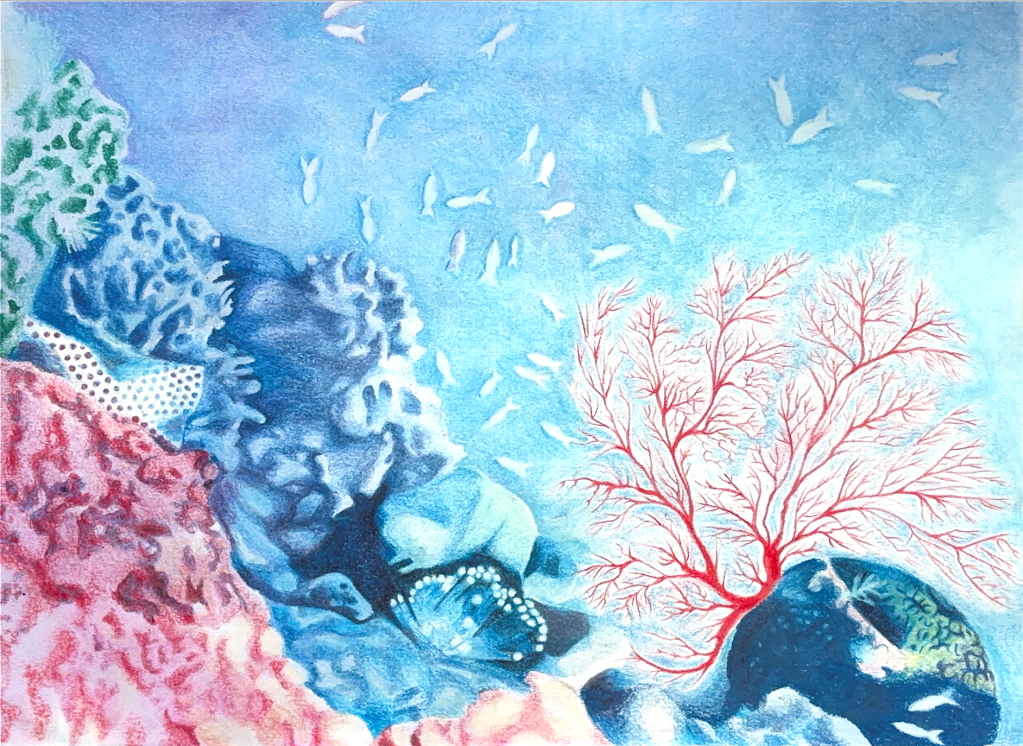
Words by Gloriya Len, art by Emily Warden.
One sunny morning of 2001, a group of researchers were looking for a natural polyester softener at a plastic recycling facility. After exploring the area for some time, they finally noticed a mushy, cloudy-looking substance under their feet, nestled among many poly-ethylene terephthalate (PET) bottles. Impatiently, they scooped a sample and brought it to the lab, hoping to find the material that made such a plasticizing effect. Examining the sample under a microscope was rather disappointing. Instead of a breakthrough polyester softening substance, the researchers saw a bunch of bacteria, greedily munching on the plastic bottle. This was certainly not something they could apply to soften fabrics.
A beacon of hope
Over the next fifteen years, the haunting spectre of plastic waste and its harmful recycling processes became a serious threat. The same group of researchers, Yoshida et al. (2016), remembered their findings and returned to the rubbish dumb to unearth the plastic munchers once more. In hope, they searched the recycling facility and scooped another sample from the mushy bottles. The news from the first experiments was astonishing: these tiny monsters were able to degrade 0.13mg/cm2 of PET a day with the complete degradation in 6 weeks at 30°C. What’s more, the bacteria evolved to have enzymes that could undo the entire manufacturing process and regenerate terephthalic acid and ethylene glycol – the starting materials used in PET production. This was something they weren’t even hoping to find: the complete, closed loop process for PET recycling.
The best problem-solver
It is no wonder that nature has already attempted to make use of plastics. Bacteria, for example, seem so hungry that they could turn anything into energy. They use everything available to eat, especially in extreme environments: stinky sulphur, salts, acids, and even heavy metals. Their adaptation abilities are so effective that they are studied for their potential to survive on other planets. To give them credit, these primitive organisms take advantage of fast reproduction, conserving the most effective mutations in future generations. Thus, no matter what happens with our planet, bacteria could inhabit Mars or at least survive on Earth to start a new post-apocalyptic evolution.
The main challenge: plastics make more plastics
The problem with plastics is that they create more plastics. Manufacturing, storage, usage and degradation stages continue to contaminate our environment. Even though we can complete the recycling cycle of PET, we will still face the challenge of soil and water toxicity. The plastic-eating bacteria, now named Ideonella sakainesis, degrade plastics in two stages to get their energy source. First, they have PETase enzymes to break the plastic down to the intermediates BHET and MHET. Second, they have METase enzymes to break down the intermediates and obtain terephthalic acid with ethylene glycol – the starting materials to manufacture PET. These intermediate and final compounds are all plastics that are still toxic to living organisms and ecosystems.
To avoid further environmental contamination, the process of plastic degradation should be modified or controlled inside a chemical manufacturing plant. Having a facility that would both degrade and manufacture PET could prevent us from producing more plastics and reuse what we already have. However, having such large and tightly controlled facilities across the world could pose a practical challenge. Solving financial obstacles and governance issues will inevitably take time – time that our planet may not have to spare in the fight against plastic pollution. One way to help progress would be to address social challenges first: promote public awareness and eco-friendly behaviours that would shape cultural attitudes toward a more responsible world.
Waiting for further biodegrading discoveries
Even if we get rid of all plastic waste, we will still face a long fight against their devastating by-products: microplastics. Perhaps plastic waste itself is not as harmful as microplastics due to their small size and widespread presence. These particles absorb everything they encounter: carcinogens, heavy metals, and many other toxic substances. They are so tiny that they get into plants and living organisms, causing serious health issues. Among such are neurodegenerative diseases, cancer and infertility that threaten us and other species with extinction. To survive in this apocalypse, we need to develop ways to eliminate microplastics. At deep sea or soil levels, biodegradation through plastic-degrading species could be the only way to do this. And perhaps somewhere in the unexplored areas of our world, another organism like Ideonella sakainesis is waiting to be discovered and clean our suffering planet.



 UnEarth Magazine.
Leave a comment