
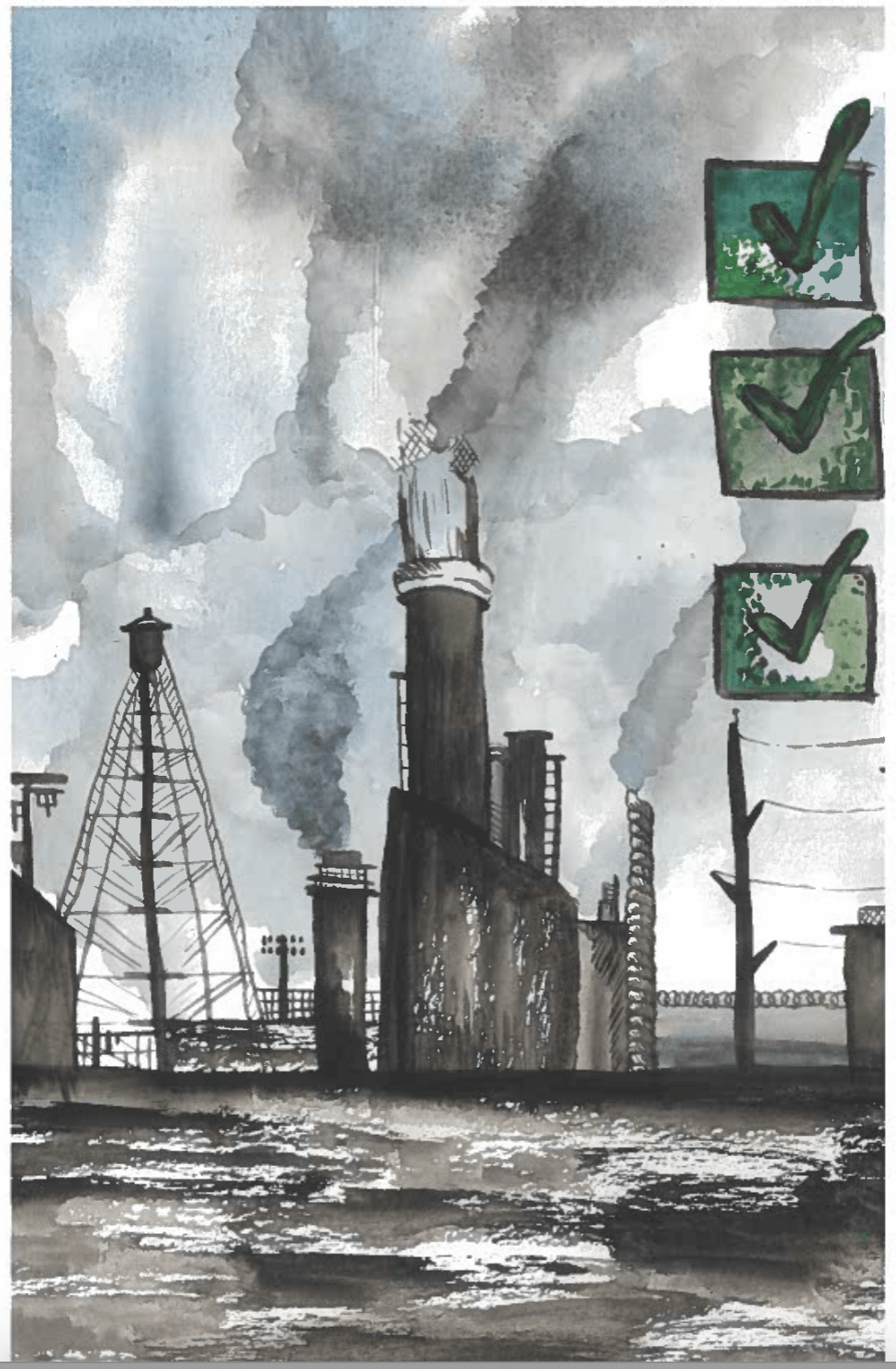

Words by Maisie Wilkinson, art by Julia St John.
Picture this: it’s Week 1, you’re in your first class of the semester, your workload is low, and life is easy. The lecturer kindly asks for nominations for the class Sustainability Representative (which I will now refer to as “Reps”). Alas, as a Geography student you’ve grown disillusioned with the University’s environmental actions, dismissing ‘Reps’ as yet another poorly disguised attempt at greenwashing. Or perhaps, you’re a Classics student – the Roman Empire probably wasn’t too sustainable and nothing bad ever happened to them, right?
Regardless of what you study, normally you wouldn’t think twice about becoming a Sustainability Rep. However, in this instance you are plagued by emails, allowing you to feel adequately guilty- but not enough to actually run for the position. Then, suddenly, the emails stop. The elusive role of Sustainability Rep fades away, becoming nothing more than a fever dream (until Semester 2 at least).
I want to clarify that I think the work of Class Representatives is incredibly useful. Having elected members to act as a voice for the rest of the student body will always be invaluable. However, the lack of knowledge surrounding the role, coupled with uncertainty from some students about how sustainability relates to specific degrees, is problematic. Here I argue it discourages people from applying, minimises the work Sustainability Reps do and therefore diminishes their impact.
To support my argument and avoid this article becoming a drivelling rant consisting of nothing but my own nonsensical ramblings, I felt it was necessary to research this issue. By ‘research’, I mean asking some of my friends for their input and opinions (rigorous, I know). Unsurprisingly, I was met with mixed responses. Some, whom I like to term ‘bad friends’, politely implied they couldn’t care less about my journalistic pursuits. Although not massively helpful, I think the apathy expressed may demonstrate that some students simply are not engaged in the work of Sustainability Reps.
Others – who now that I think about it, were Class Reps – felt attacked and warned me that the university would strike me down and silence me like a cruel (yet sustainable) God. As a result of this, I think it is important to address this matter sensitively. As I have previously emphasised, I deeply respect the work of Sustainability Reps and think the people who undertake these roles have the best intentions at heart. However, I don’t think it is unreasonable to question the role itself; students should not be afraid to question the institutions which they are a part of, especially given the role is meant to represent the student voice.
It must be noted that some people described the Sustainability Rep position as an ‘empty role’, dismissing it as nothing more than a ‘CV booster’. Whether or not this is true is difficult to determine, as much of the time, people in these roles are genuinely passionate about sustainability and want to make an impact. However, the responsibilities of the job itself are poorly defined, which means the work that Sustainability Reps do is minimized and makes members of the student body question their impact.
This potentially discourages people from applying as they are sceptical that they would have the ability to make changes. One person I spoke to expressed concerns about ‘greenwashing’, suggesting this was a reason she hadn’t applied for a position previously. Again, to understand whether the introduction of Sustainability Reps is simply a box-ticking exercise would require more research which, unfortunately, is beyond the scope of this article. What this does highlight is that the actions made by Sustainability Reps need to be more transparent and made higher profile, to allow people to consider this for themselves.
A final consideration is that responses were influenced by the degree people were undertaking. For instance, those I questioned from the School of Geography and Sustainable Development – who I would consider better informed when it comes to sustainable practices – expressed concern over the meaningfulness of the role. This differed from the perspective of a Classics student, who seemed bemused at how sustainability was relevant to and could be implemented within her school. This again reinforces the argument for more accessible information regarding what these roles entail and why they are important – for any subject.
Ultimately, I believe that more clarity on the role, responsibilities and work of Sustainability Reps needs to be shared with the student body. Committing to sustainability and taking action is a positive thing after all, therefore we should share the achievements and make the work of Sustainability Reps more well known.



 UnEarth Magazine.
Leave a comment