
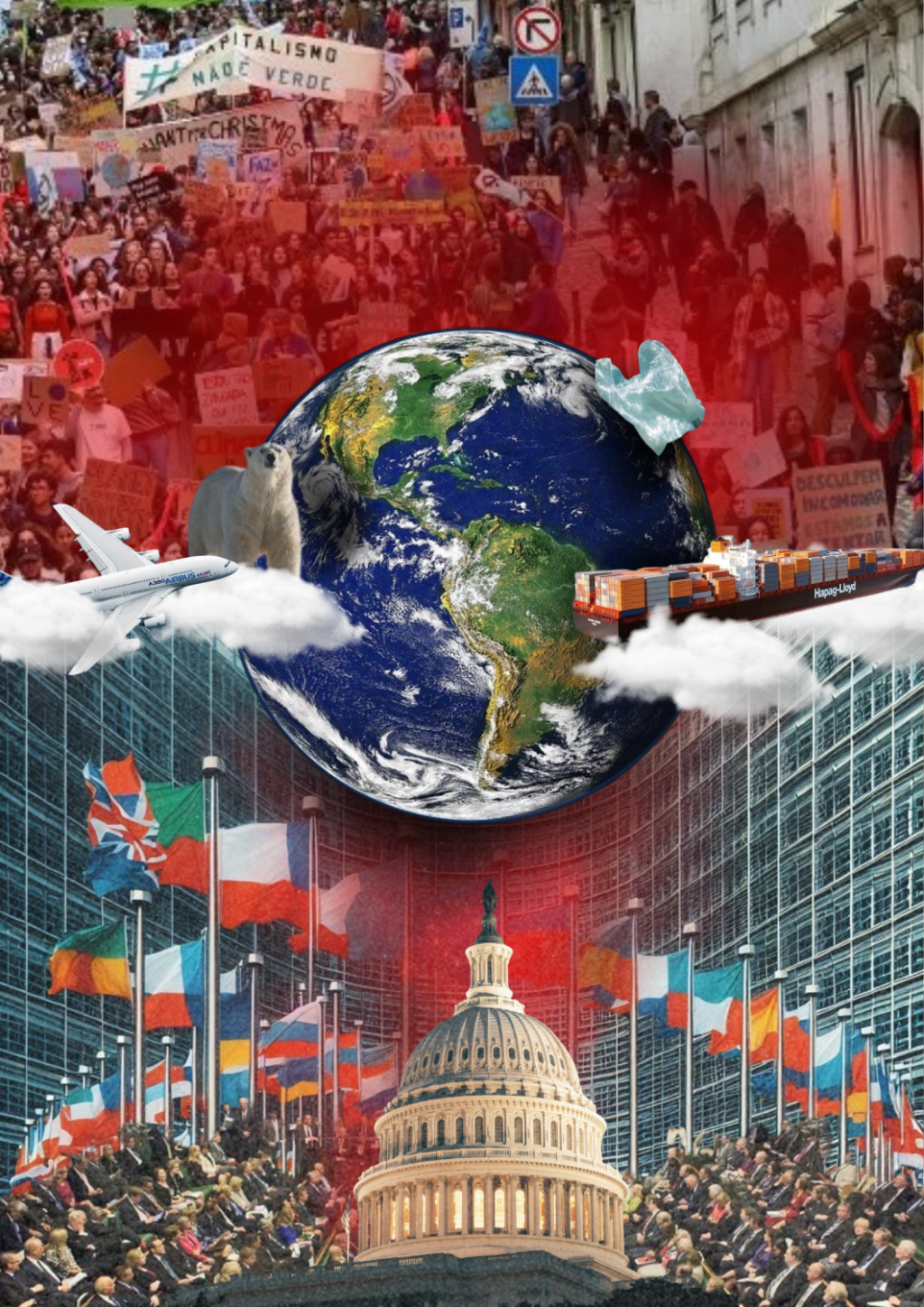
Writing by Margaret Chingos – Art by Jessica Nunn
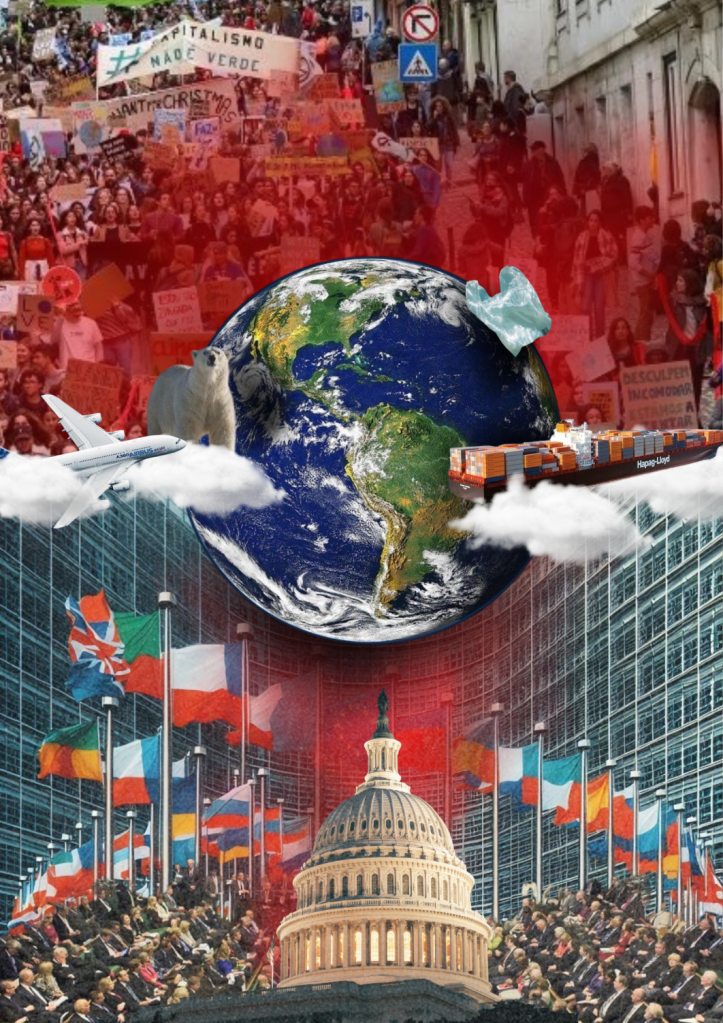
The phrase ‘Think Global, Act Local’ has lulled us into complacency. Suggesting small-scale solutions to global challenges, this lighthearted refrain has been repeated for too long. Originating as the Friends of The Earth slogan in 1971, the phrase was well suited for the environmental movement at the time — influencing individual actions like opting to ride bikes instead of cars and switching to a plant-based diet. And while those actions were, and remain, important, the phrase does not suitably address the challenges of today. Somewhat ironically, the phrase has since been co-opted by the business world as a strategy to cater to consumers, a symbolic shift in rhetoric that suggests the phrase, while rooted in good intentions, needs an update. I argue that it is time to flip this flippant approach, proposing the idea of ‘Think Local, Act Global’ as an improved tactic for action in the modern world.
My first qualm with the phrase ‘Think Global, Act Local’ is the impossibility of thinking globally. The unfathomable scale of change demanded by global-scale issues leads to anxiety, rather than inspiration. It’s hard to think one bite at a time when you’re staring down the elephant. Instead, I encourage us to ‘Think Local.’
Local thinking offers inspiration for action because most of us hold deep and personal care for the environments in which we live. The impacts of global issues such as climate change or biodiversity loss are tangibly affecting our communities. In St Andrews you can see it in extreme storms that distort the dunes on West Sands, washing away fragile habitats for plants and animals. I remember a friend lamenting after Storm Éowyn that the surge stole her favorite spot on the beach – the place where she decided she wanted to come to St Andrews. It is experiences like this, where we feel emotionally connected to our environments, that should inspire us to take action. Personal connection makes us invested in global challenges. When we situate our thinking on a local scale, we take action from a place of connection and love, rather than from anxiety.
The second half of the phrase ‘think global, act local’ presents a false plan of action for changes required to tackle the global issues of today. Local action is immensely important; we should all be asking ourselves, our communities, and those who represent us in governments, to make decisions centered around the needs of the planet and our people. But action at the local level, without consideration of global action, distracts us from the real problems at hand. One measure of individual action, the ‘Carbon Footprint’, was created by British Petroleum in their 2003 advertising campaign. They used the carbon footprint as a measure to place blame for climate change on individuals as opposed to their insatiable greed. It is distractions like this that can keep us content with taking short showers and recycling, while those on the global scale continue to line their pockets through systems that operate larger than any individual.
So, as part of my call to ‘Think Local, Act Global’ I encourage us to act on a global scale. Continue to take individual action and make changes in your communities, but don’t stop there. Turn your attention to the global structures that fuel today’s challenges, such as corporate interest that poisons our politics or the grotesque accumulation of wealth of our richest. Dissent and dismantle. Don’t let the patterns remain patterns.
Put together, the phrase ‘Think Local, Act Global’ provides a better plan of attack for an improved world. It grounds our thinking in places we love, motivating us to fight for change. Moreover, local thinking reminds us every day that action is needed. Global action channels our desire to create change into efforts that make a meaningful difference. It focuses on dismantling systems from their core, rather than fighting their effects.
‘Think Local, Act Global’ is, at its root, also a rhetorical quip. But entertaining its premise allows us to consider what motivates us to act, and where that action needs to be focused. In an overwhelming world where everything is labeled as a crisis, and everyone needs to change, it is important to find clarity on why you care, and what you do about it. Rhetoric aside, I encourage you to reflect on these questions. I hope these reflections allow for clarity on what you can do to make the world a better place.



 UnEarth Magazine.
Leave a comment