

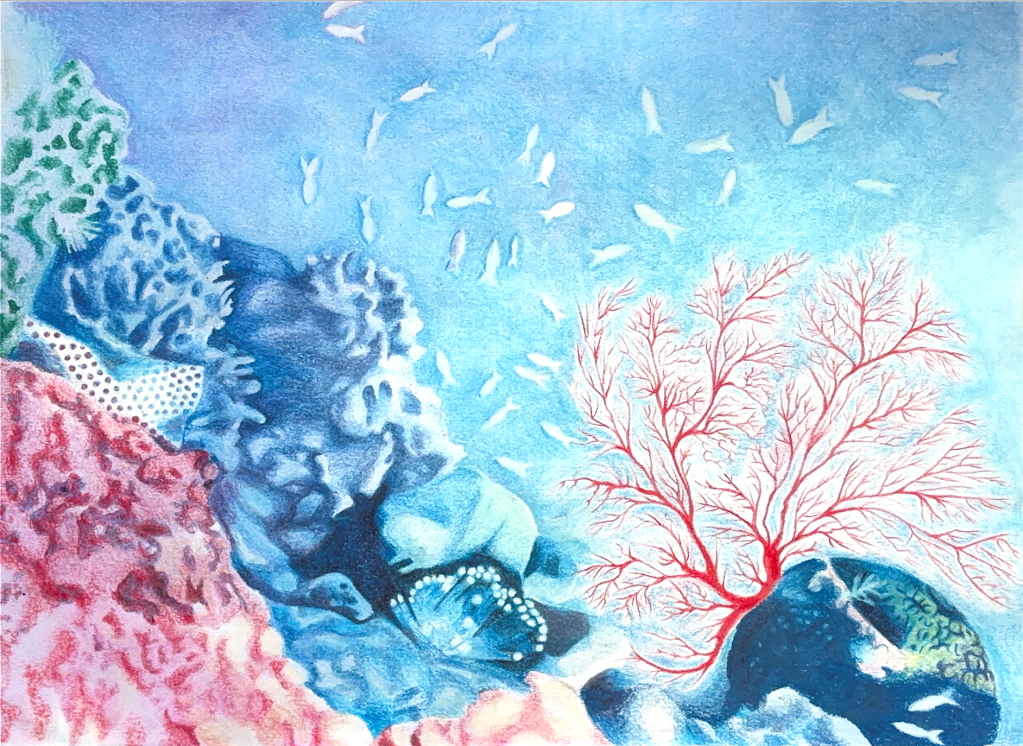
Words by Rowan Hunter, Art By Madeline Sully
It would be easy to say that it had started with the fires. One day the people of the valley lived in an idyll, the summer green and lush and heavy with ripening fruit; the next, the sky was red and thick like an angry, shouting mouth exhaling smoke so heavy that they could no longer see the tops of the mountains. Of course this was not anyone’s fault in particular, and so the people paid it largely no mind, except for to remark on how unpleasant it was to choke on the air.
Or perhaps it started with the landslide: where the steep pass had been made treeless for a road, the Earth sighed and turned over in its sleep, and suddenly the people could no longer leave the valley. They did not particularly mind this, though, as the valley provided more than enough for them. This was, after all, why they lived there.
The flood was more difficult to account for. Of course everyone knew that most of the village was built on the floodplain, yet this knowledge failed to console those who had to watch their houses and fields and animals swallowed whole by the torrent. The soil of the riverbanks which had been so giving, so sustaining, began to produce again almost immediately, but produced strange and creeping things which nourished no one. And so the people abandoned the plain and huddled on the valley’s sharp slopes in whatever meagre shelter they could make, and cursed the river for coming to its logical conclusion.
What happened the next summer should not have surprised anyone: this time the fire crept past the edges of the valley, an awful, choking heat settled across all the land, what little snow had fallen on the mountains burned away, and the soil cracked for lack of water.
And so there were no more trees around the valley, only twisted and blackened stumps in a hellish field of deep heavy ash; if the people walked what once were paths the dust would swirl up into their faces and thicken in their throats. No more animals came into the valley; no more fruits grew in the bush there, for the bush was gone; there was no wood from which to build more and more coffins.
And at summer’s end, the river began to flow backwards and filled with blood, the people swore it did, they swore they’d seen it. But maybe that was just the thirst talking because the river was long dry, nothing but a dusty chasm littered with fish bones.
One day emerged among them a prophet who claimed to speak with the voice of the great being who was, evidently, punishing the people of the valley. The remaining people– desperate, hungry, tired– were out of options. And such a darkness set in, a strangeness of the mind, which made everyone an enemy and any consolation acceptable.
And so the people cried out Oh great one, all-consuming one, you have taken our food and you have taken our water and you have taken our very homes, what more do you want, what more will be enough to satisfy you? And the prophet said Well that’s easy– the great one wants your lives, your selves, your very humanness, nothing short of that will satiate.
And so the people conferred and chose an elect, one who represented the best of all of them, one who was young and strong and burned bright with the flame of life and joy and creation, who was loved and who was most precious to all the people. And although she was afraid, she knew this was a great honour, and so she bowed her head and accepted the drink which dulled her senses and the rope which bound her hands and neck. And it was in this way, laden with tin amulets and garlands of flowers and other offerings besides, that she went without protest into the bog, the last place left in the valley which the great one had, apparently, held dearly enough not to burn.
And when the people returned, weeping, from this task, they discovered that the Prophet had disappeared, and with him what little treasure the people had retained. Searchers were sent out, and though they faced great danger and loss in the wilds, no-one ever saw the Prophet again. And despite their sacrifice, the disasters did not stop. Eventually the people of the valley ceased entirely to be people, and became instead a collection of bodies and artefacts, whose beliefs did not matter in the face of what happened to them.
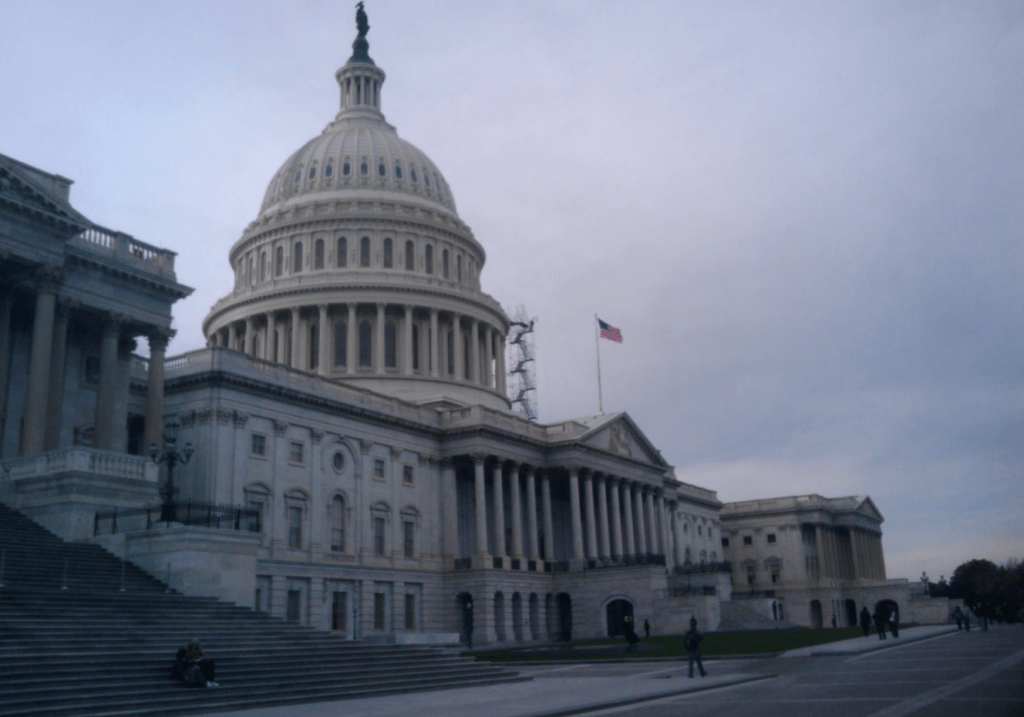
And once the federal disaster relief agency finally cleared away the slide, after years of unrelenting promises to act and failure to do so, the story made national headlines: “Senseless tragedy in remote community”, but of course the camera crews could not share what they had filmed, as there are standards for what kind of thing you can televise. And none of the memorials brought the people back, and everyone quickly turned their eyes away, and quietly the All-Consuming (which was never really the Earth, by the way, did you catch that?) began grasping, reaching out for what it might devour next.

 UnEarth Magazine.
Leave a comment