
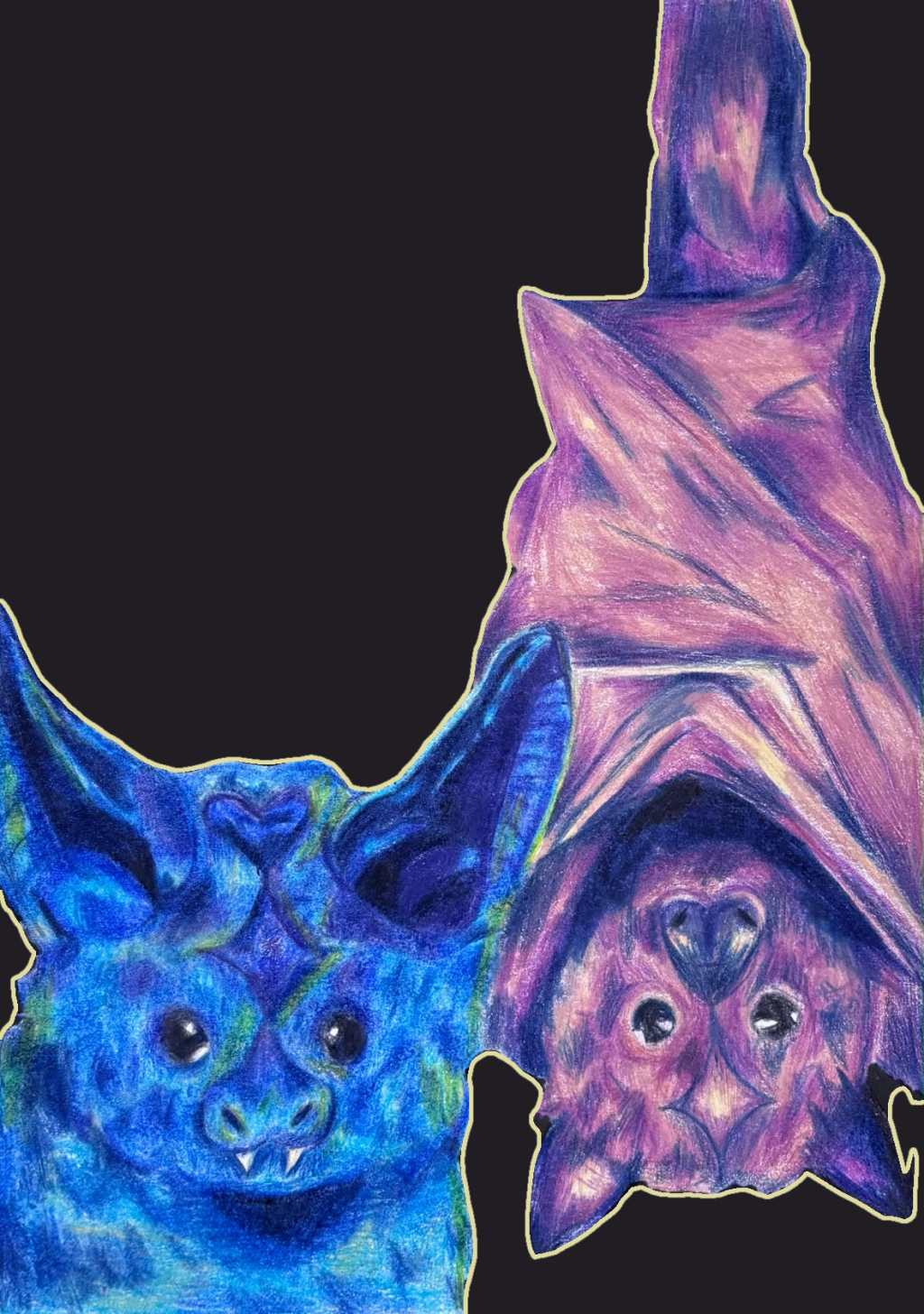
Words by Roseanna McNaught-Davis, art by Grace Ross
With the darker nights creeping in and the spooky season drawing near, bats are something that people tend to fear! But these flying mammals have been unjustly associated with ghosts, skeletons and witches when they actually provide countless treats for the environment and humans rather than tricks! So, I’m here to brush off the cobwebs and unveil their important contributions to the world, as well as debunk the phantom myths surrounding bats.
Halloween originated from the ancient Celtic festival known as Samhain (meaning end of the summer), held on the 31st of October to celebrate the end of the harvest. However, this was also a season where Celts feared the arrival of ghosts due to the falling darkness and decay of the land. To warn off these ghouls, the Celts dressed up in costumes and built raging bonfires, attracting insects and bats to feast off their prey. Watching bats swoop and dive near the flames for their food made the Celts believe they were mischievous spirits. However, while they took their place at the festivities, they also played an integral part in reducing insect numbers.
Bats gorge off pesky, crop-eating insects such as caterpillars, moths and midges, acting as natural pesticides and protecting harvests. This reduces costs for the farmer and reduces the use of harmful, chemical pesticides overall, boosting ecosystem health and crop yields. All 18 species of bat in the UK are insect-eating bats and can eat up to 3,000 insects a night, and according to the Bat Conservation Trust, “in the United States, insect-eating bats are estimated to save farmers around US $23 billion each year by reducing the need for pesticides”. This is a win-win situation for the environment, agricultural production and bats alike and should encourage increased protection of bats due to their contributions to nature and people.
Similarly, fruit bats are vital to food production as well as reforestation by dispersing seeds. Although fruit bats are not native to the UK and live in tropical regions, fruit bats carry seeds for long distances and deposit them amongst their faeces (which germinates the soil) in degraded areas where there is less competition for plant growth and threats from herbivores. This allows for the regeneration of new forests which provides habitats for wildlife, protection against soil erosion, as well as carbon sequestration, and boosts agricultural productivity as farmers spend less money in sowing seeds. Similarly, nectar-feeding bats pollinate flowers, allowing for germination and further growth of plants.
However, ‘four of the 11 British Red List Mammals at risk of national extinction are bats.’ On a developmental scale, bats are being threatened in the UK by deforestation as a result of urban and agricultural growth, leading to the eradication of their natural habitat, while light pollution is having harmful effects on their nocturnal routines by delaying their emergence from roosts and reducing hunting time. The use of pesticides is poisonous to bats and also decreases their insect food source.
Therefore, because bats rely heavily on environmental factors, they are an excellent gauge for monitoring environmental change as they are sensitive to changing surroundings; for example, fewer bats may hint at a loss of habitat, or a depleting insect population, making them a clear indicator of ecosystem health.
Hopefully, we have convinced you that bats are not as scary as they are often perceived, and that they provide many ecosystem services to humans, especially in the agricultural sector, and do wonders for environment, reforestation and the protection of habitats. If you have a garden and find maintaining it to be a chore, then protecting bats is simple. Prioritising dark spaces in your garden and feeding insect populations by letting the grass grow freely can boost bat numbers.
If you wish to dive further into the Halloween spirit (or missed out on a Fright Night ticket!) then look no further! There are guided bat walks within St Andrews which take place along the Kinnessburn or at Kinkell Byre, so you can experience their remarkable activities for yourself. So the next time you see a bat in the night, don’t let it give you too much of a fright


Leave a Reply