
Words by Jessica Robson, Art by Ru Todd
Known for its vibrant marine habitats, white-sand beaches and luxury island resorts, no explanation is needed to understand the continual growth of the Maldives’ tourism industry. However, with tourists comes waste, a lot of waste. Hence, a question is posed: how does a country, whose area is 99% water, dispose of such high quantities of waste? And does this method of disposal comply with the message of sustainability that the tourism industry continually advocates for?
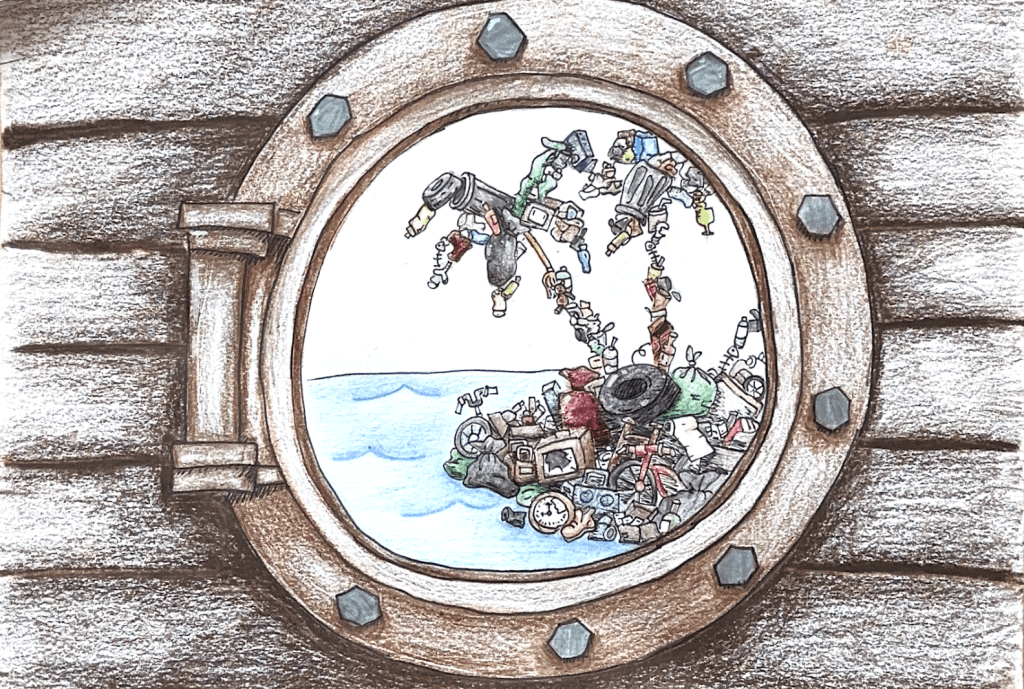
Waste became a legitimate issue for the government in 1991, where increasing population and tourism meant an unsustainable quantity of rubbish. The answer to this was the creation of Thilafushi, an artificial island with the sole purpose of landfill. Located just west of Malé (the country’s capital), this island has become the main dumping and burning ground of waste since its first disposal in 1992. It has a disposal area of 0.5km2 and continued indiscriminate dumping has meant that it is currently growing at a rate of one square meter per day, posing a significant risk to both human health and ocean life.
The abundance of toxic material on the island has contaminated both the air and surrounding lagoon. In particular, its burning has resulted in dangerous levels of toxic gas and smoke which permanently shrouds the surrounding area – an area that is far enough away from resorts to hide such horrors from visiting tourists. This poses a serious health risk for all those working on and living nearby the island. 15% of workers have suffered illnesses after starting work on Thilafushi, and around a third of locals have also reported similar impacts. These illnesses often materialise as lung diseases or serious asthma, creating legitimate cause for concern regarding the impact of the island on citizens respiratory systems and quality of life.
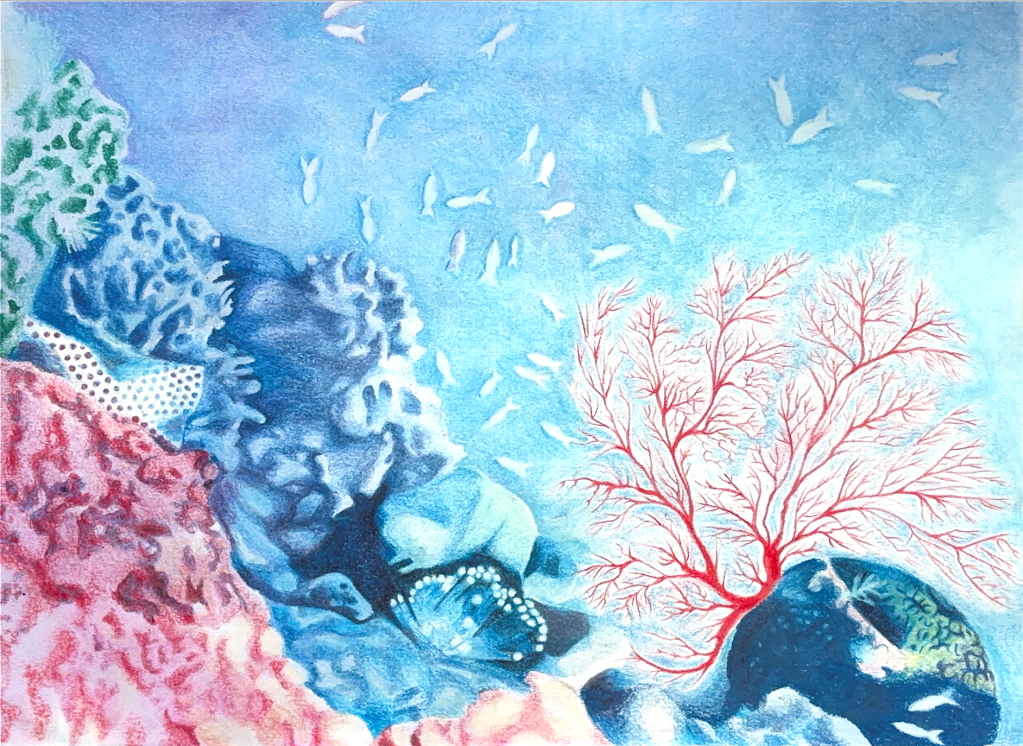
Moreover, continued haphazardous dumping has caused surges of waste floating in the island’s lagoon and surrounding sea. Materialising primarily as plastic contamination and ocean acidification, this threatens the Maldives’ vast marine and coral ecosystems. As a state so heavily reliant on its ocean, such pollution is simply a matter of life or death. Rising sea levels will only amplify this issue. As the average ground level in the Maldives is 1.5 meters above sea level, and sea levels are expected to rise over a meter by 2100, this substantial level of waste could very easily be flushed into the Indian Ocean. The ecological impacts of this would be catastrophic, making this an issue of urgent concern, not only for the Maldivian government but also for the global community.
But what is at the core of this issue? The primary answer to this is tourism. The sector’s rapid expansion has created ‘adverse environmental and socio-cultural impacts’, including the increased dumping of waste both onto Thilafushi and into the Indian Ocean. Despite the country’s active push towards zero-waste tourism, a given tourist still generates over seven times more waste than an islander living outside of the capital and approximately 70 percent of all tourist resorts still send waste to central management facilities like the one on Thilafushi.
In an attempt to tackle this issue, the Maldivian government is actively pursuing zero-waste tourism. One aspect of this is the legislative ban of the production, import and consumption of single-use plastics. Implemented in 2022 and expanded upon in 2024, the law is an attempt to emancipate the tourist sector from heavy reliance on such materials. This, combined with working with local communities to develop more sustainable waste management systems, provides the region with hope of survival. Supported by the World Bank, the Maldives Clean Environment Project (MCEP) and Maldives Enhancing Employability and Resilience of Youth (MEERY) project both actively teach the country’s youth about creating a cleaner and safer Maldives. By strengthening local waste processes, the state hopes to move away from sole reliance on central facilities.
Despite these efforts, Thilafushi continues to operate.
Nevertheless, there is hope. Through a better level of international support and awareness of such facilities, a greater commitment to sustainable tourism, waste management and plastic use could be achieved. Therefore, while Thilafushi is unlikely to disappear, we can only hope that future generations will learn from its existence and progress further towards a sustainable future for waste management.



Leave a comment